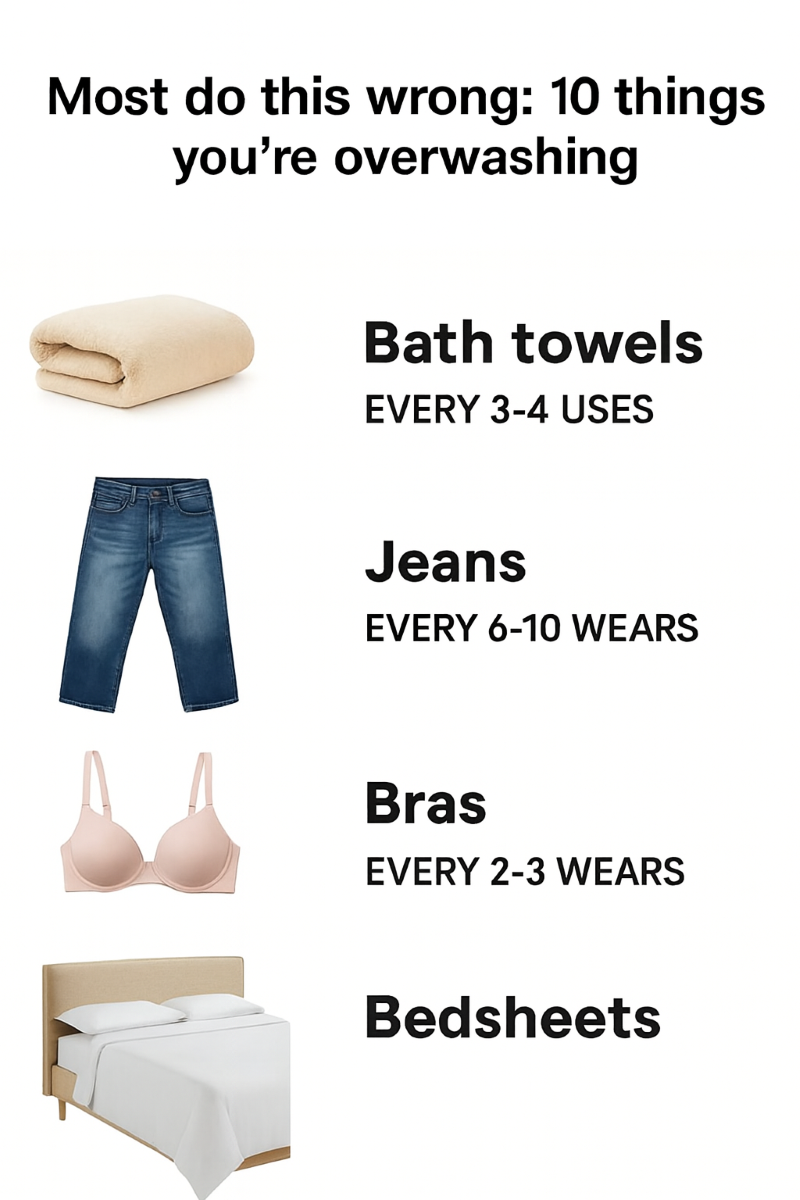
Most People Do This Wrong: 10 Things You’re Over-Washing (And Why It Matters)
From clothing and bedding to personal care and household habits, understanding how often something truly needs washing can save time, money, and frustration. Below are some of the most commonly over-washed items — and what experts actually recommend instead.
1. Bath Towels: Not After Every Shower
Many people throw towels in the wash after a single use, but this is usually unnecessary. A properly dried towel can be used three to four times before washing.
As long as you hang it fully open so it dries quickly, bacteria growth remains minimal. Over-washing towels breaks down fibers, making them rougher and less absorbent over time.
2. Jeans: Designed to Be Worn Again
Jeans are built to be durable, yet they’re often washed after just one or two wears. This causes fading, shrinking, and fabric breakdown.
Most denim can be worn six to ten times before washing unless visibly dirty. Spot-clean stains, air them out, and wash inside-out in cold water to extend their life.
3. Bras: Elastic Needs Rest
Bras are delicate and don’t benefit from daily washing. Washing too often stretches elastic and reduces support.
The ideal frequency is every two to three wears. Rotating bras allows the fabric to recover, helping them last much longer. Hand washing or using a lingerie bag is best.
4. Bedsheets: Daily Washing Is Overkill
Unless there’s illness, excessive sweating, or allergies, washing sheets every two to three days is unnecessary.
For most households, once a week is sufficient. Mattress protectors and pillow covers help keep sheets cleaner for longer while reducing wear.
Personal Care Items You’re Washing Too Often
Personal Care Items You’re Washing Too Often
Over-washing isn’t just hard on fabrics. It can also disrupt your skin, scalp, and even immune defenses.
5. Hair: Daily Shampooing Isn’t Required
Washing hair every day strips natural oils that protect both hair and scalp. This often causes dryness, irritation, or rebound oiliness.
Most people do best washing every two to three days. Curly or dry hair may need even less frequent washing, while oily hair may need slightly more — but still not always daily.
6. Hands: Clean, Not Constantly Stripped
Handwashing is essential, but excessive washing can crack skin and weaken its protective barrier.
Wash hands:
- After using the restroom
- Before eating
- When visibly dirty
In other situations, alcohol-based sanitizer may be sufficient. Moisturizing regularly helps prevent dryness and irritation.
7. Face: More Is Not Better
Cleansing the face too often removes natural oils, leading to sensitivity and breakouts.
For most skin types, twice a day is ideal. After workouts, a gentle rinse may help, but harsh cleansers used repeatedly can damage the skin barrier.
8. Pets: Bathing Too Often Causes Skin Issues
Many pets are bathed far more than needed. Frequent bathing strips natural oils from their skin, causing dryness and itching.
Most dogs only need a bath every few months, depending on breed and activity level. Regular brushing often does more for cleanliness than frequent baths.
Household Habits That Waste Water and Wear Things Down
Household Habits That Waste Water and Wear Things Down
Some over-washing habits don’t just affect items — they also increase utility bills and environmental impact.
9. Dishes: Pre-Rinsing Is Usually Unnecessary
Modern dishwashers are designed to handle food residue. Pre-rinsing dishes wastes water and can actually reduce cleaning effectiveness.
Simply scrape off large food particles and let the dishwasher do its job.
10. Fruits and Vegetables: Gentle Is Enough
Over-washing produce — especially with soap or soaking — can remove natural protective layers and nutrients.
A simple rinse under running water is enough for most fruits and vegetables. Firm produce can be gently scrubbed with a brush.
11. Cars: Too Many Washes Damage Paint
Frequent car washing increases micro-scratches and wears down protective coatings.
Unless exposed to salt, bird droppings, or heavy dirt, washing every two weeks is usually sufficient. Using gentle soap and soft tools protects the finish.
The Hidden Cost of Over-Washing
Over-washing doesn’t just shorten the lifespan of items. It also:
- Increases water and energy use
- Raises utility bills
- Wastes detergent and time
- Creates unnecessary environmental strain
Learning when not to wash is just as important as knowing when to clean.
Clean Smarter, Not Harder
Cleanliness is about balance, not excess. By adjusting washing habits based on actual need rather than habit or anxiety, you protect your belongings, your skin, and your wallet.
Sometimes, doing less really does lead to better results.


0 Comments:
Enregistrer un commentaire