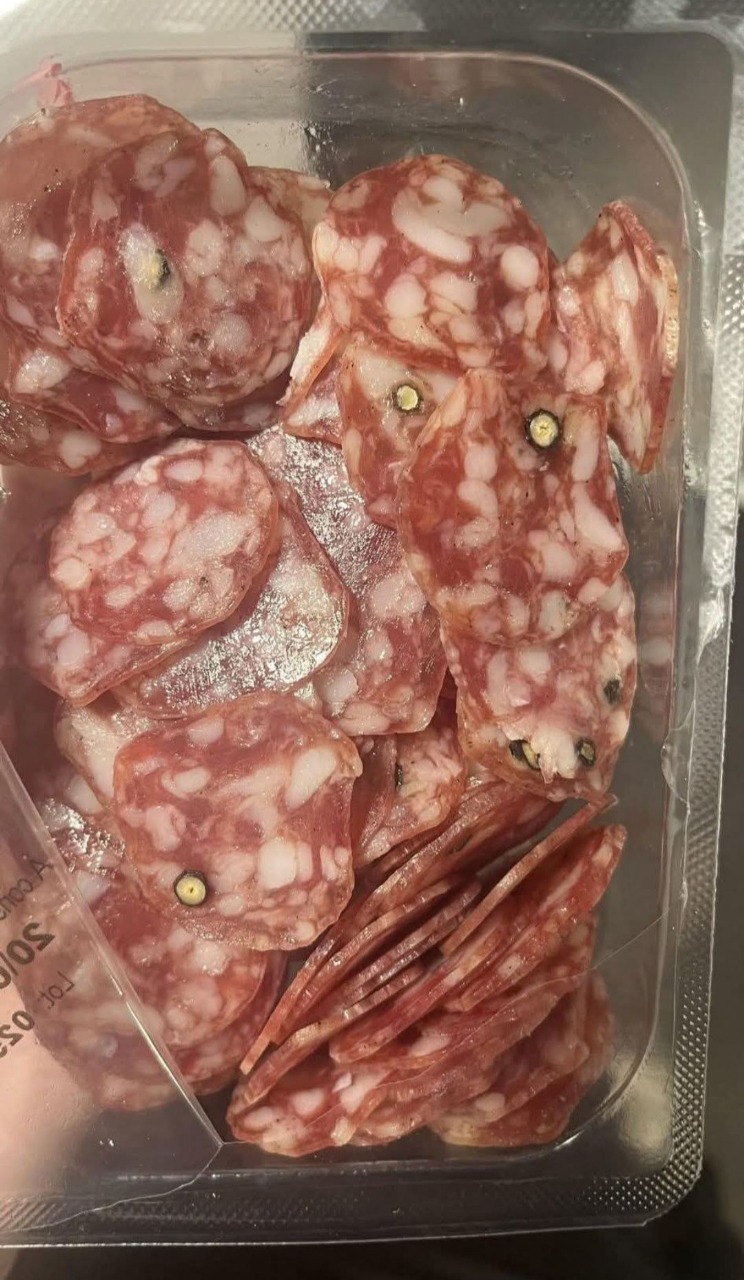
What’s This on My Salami? I Know It’s Not Mold (I Think)… I Was in Paris and Couldn’t Bring Myself to Eat It!
If you’ve ever bought traditional salami—especially in Europe—you may have noticed a white, dusty, or powdery coating on the outside. It looks suspicious, and your instincts might scream mold! You’re not alone. Many travelers encounter this in places like Paris and hesitate before taking a bite.
Here’s the reassuring truth: it’s usually completely normal—and even desirable.
The White Coating Is (Usually) Beneficial Mold
On traditional dry-cured salami, that white coating is most often Penicillium nalgiovense, a good mold intentionally encouraged during the curing process.
Why it’s there:
- Protects the meat from harmful bacteria
- Helps regulate moisture loss
- Contributes to flavor development
- Indicates traditional, artisanal curing
In short, it’s a sign of quality, not spoilage.
How to Tell the Difference: Safe vs. Unsafe
 Safe, Normal Salami Mold
- White or off-white
- Powdery or chalky
- Evenly distributed
- Dry, not slimy
- Smells mild or slightly nutty
This is common on French, Italian, and Spanish cured meats.
 When You Should Be Concerned
Avoid eating salami if you see:
- Green, blue, black, or fuzzy patches
- Wet or slimy surface
- Strong sour, rotten, or ammonia smell
- Mold inside the meat when sliced
These signs can indicate spoilage or contamination.
Should You Eat It or Remove It?
Traditionally:
- The casing (with mold) is peeled off before eating
- Or wiped with a clean, damp cloth
You’re not expected to eat the moldy casing itself—just the cured meat inside.
Why It’s So Common in Paris (and Europe)
European cured meats are often:
- Less processed
- Preservative-light
- Naturally fermented
Unlike many supermarket meats elsewhere, they’re made the old-fashioned way—which includes beneficial mold.
So what looks alarming to tourists is often a badge of authenticity to locals.
Why Your Instincts Aren’t Wrong
Humans are wired to avoid mold—it’s a survival instinct. But in controlled food traditions (like cheese and cured meats), some molds are not just safe—they’re essential.
If you’re unfamiliar with it, hesitation is totally normal.
⇆
Final Verdict
That white coating on your Parisian salami? Almost certainly harmless and intentional A sign of traditional curing Safe once the casing is removed
Next time, you can enjoy it with confidence—or at least with a little less fear.
When in doubt, trust your senses—but also remember: sometimes the “weird” stuff is exactly what makes food special. 


0 Comments:
Enregistrer un commentaire