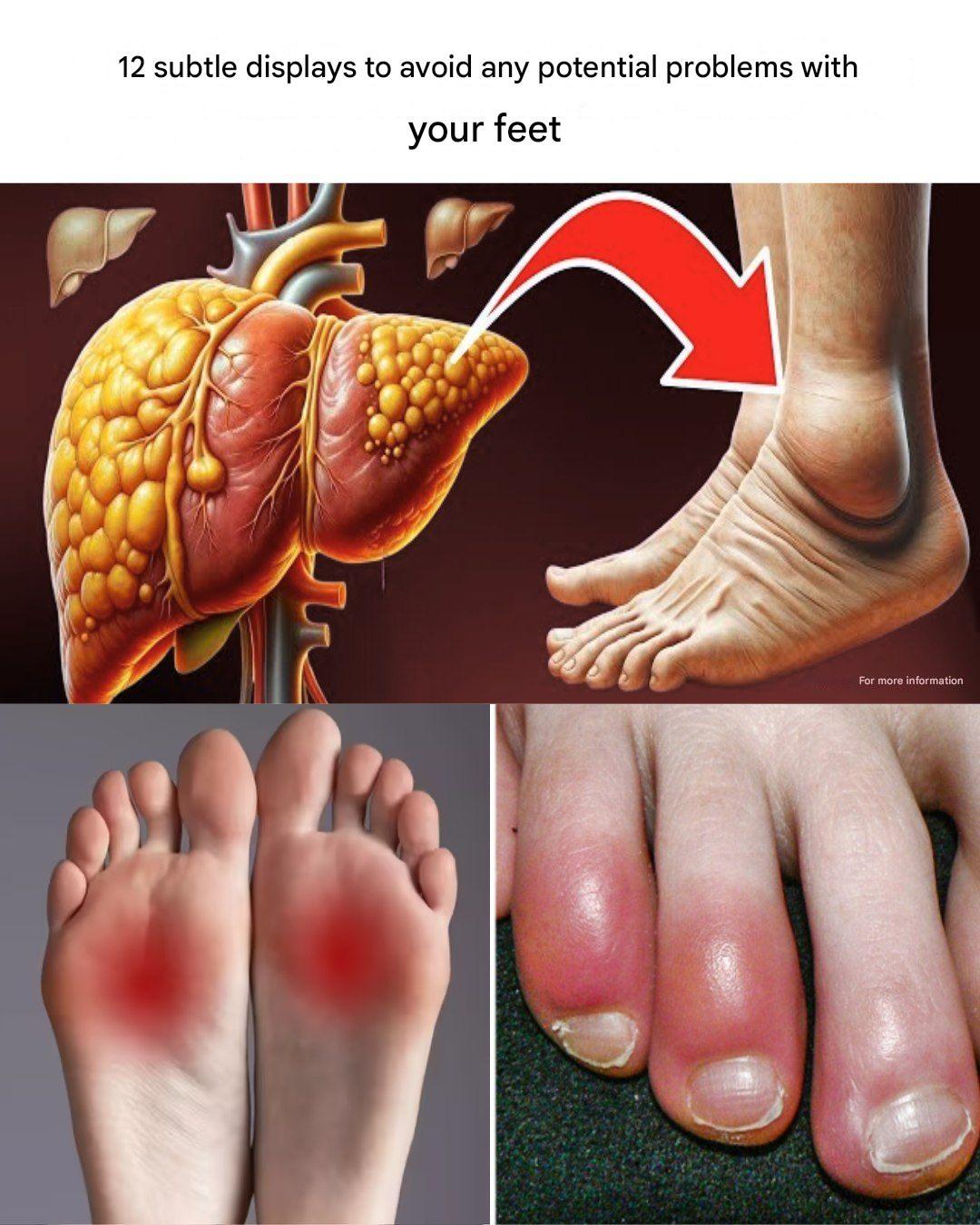
Not only do your feet accompany you through the day, but they may also convey information about your internal health. One of her organs? Your liver.
The liver is known as the body’s natural detoxification center and plays an important role in filtering the blood, regulating metabolism, and maintaining overall balance. But when it is under stress or starts to weaken, the first symptoms can appear in unexpected places, such as the feet.

Below are 12 subtle signs related to the foot that can indicate liver problems. If you notice one or more of these symptoms, it may be time to pay special attention to your liver.
1. Swollen feet or ankles
The swelling may be due to fluid retention, a common problem when the liver doesn’t produce enough albumin, a protein that helps maintain good fluid balance in your bloodstream.

2. Itching of the soles of the feet without apparent cause
Persistent itching, especially on the soles of the feet and more intense at night, can be due to a buildup of bile salts, which indicate problems such as cholestasis or bile flow blockage.
3. Yellow toecuticle or toenails
Jaundice (a yellow tinge on the skin, toenails, or eyes) often means that the liver is not processing bilirubin effectively, a warning sign of early liver disease.
4. Dark spots or uneven skin tone
Unexplained discoloration or dark spots on the feet may be related to hormonal changes caused by liver dysfunction, especially in long-term cases.

5. Red or spotted soles
Bright red insoles can be a sign of palmar erythema, which is sometimes related to hormonal imbalances caused by chronic liver stress.
6. Tingling, burning or numbness
These sensations may indicate peripheral neuropathy, a form of nerve damage that can occur when liver function declines.
7. Cold feet, even in hot weather
Chronic liver problems can slow down your circulation and metabolism, leaving your feet feeling cold despite a hot environment.

8. Brittle, yellowed or deformed nails
Liver disease can interfere with the absorption of nutrients and cause the toenails to weaken to split, crack, or change color.
9. Cracked heels that don’t heal
Extremely dry, cracked heels, even with regular moisturizing, can be the result of internal moisture problems or liver-related skin changes.

10. Common fungal infections of the toenails
A weakened immune system associated with liver stress can make you more susceptible to infections, especially persistent fungal problems with your toenails.
11. Leg cramps or fatigue of the feet
If the liver does not regulate electrolyte levels, it can cause leg cramps or unexplained fatigue in the feet.
12. Unexplained bruising on the feet or toes
If you notice random bruising without injury, it may be because your liver is not producing enough clotting proteins, resulting in easy bruising.
When should you see a doctor?
If you notice several of these symptoms, or if they persist, it is advisable to talk to a doctor. Liver disease is often a silent threat that develops gradually until symptoms worsen. Complications can be avoided by early detection and intervention.

Proactive tips to support liver health:
- Stay hydrated with plenty of water
- Limit alcohol and processed foods
- Eat foods that support the liver, such as green leafy vegetables, beets, and berries
- Maintain a healthy weight
- Reduce stress through regular exercise and mindfulness
Final Thoughts: Listen to What Your Feet Say
Don’t neglect the subtle signs. Your feet can tell you something important about your liver health. By being mindful and acting early, you can take important steps towards better health, starting with the basics.
Warning: This article is for informational purposes only and is not a substitute for professional medical advice. Always consult a qualified doctor for personalized recommendations.


0 Comments:
Enregistrer un commentaire