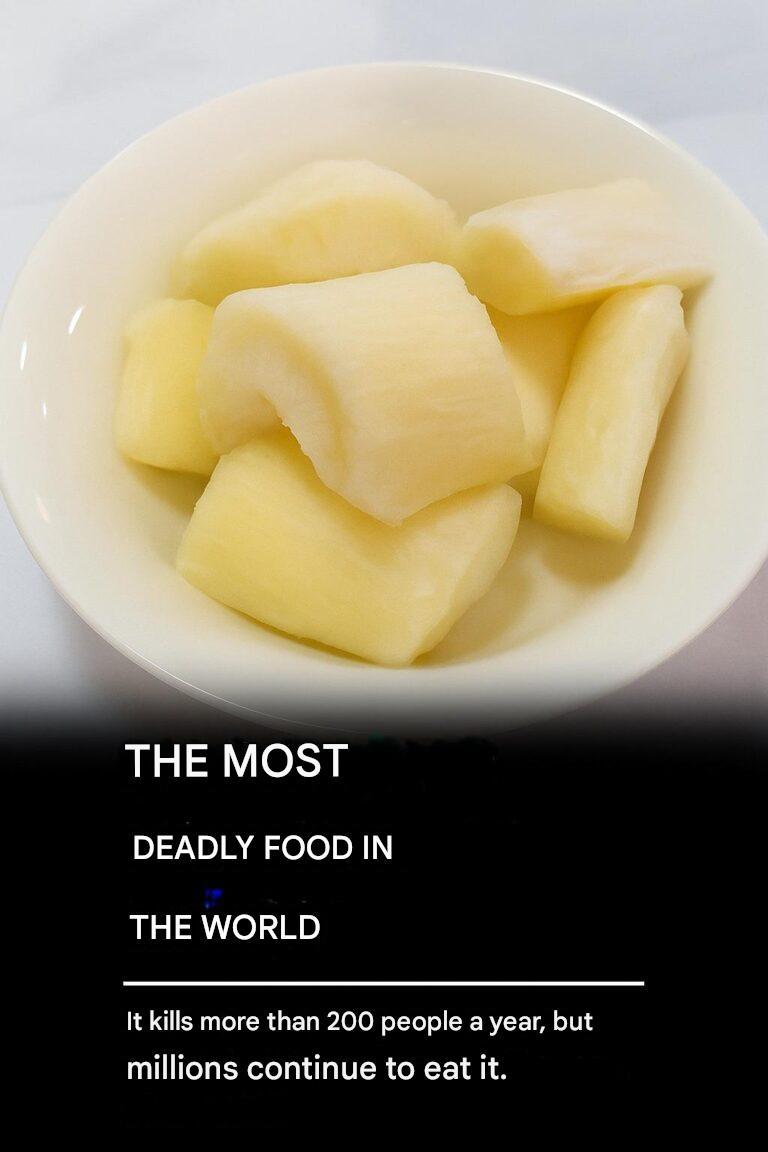
Our millions of people. Fueled the economy. It is a basic diet in Africa, South America and the Caribbean. Eppure, this radice of daily use can be fatal.
Ecco la cassava: a single tubero starch contains almost 500 million people in all of the world, but it is also safe and the sad title of “the most lethal of the world” is prepared in the wrong way.
For another year, more than 200 people have been affected by the development of manioca and other causes of permanent paralitis or neurologic disorders. Pure, paradossalmente, the cassava is a safe food for the community in which the food safety is fragile.
How can a food be all the more likely to be essential and delicious?
What is cassava?
Cassava (note also yuca, not to be confused with yucca, the ornamental plant) is a rustic and drought-resistant root, originating from South America. The polpa amidacea is a carbon dioxide melt, it makes it a vital calorie melt in the tropical region.
Esistono due tipi principali:
Manioca dolce: more povera di tossine, more safe to consume with a simple cottura.
Manioca amara: contains high levels of glycosidia cianogenici, which may cause cianuro when it is ingested.
Curiosity: the pearl of tapioca, it garnishes, it fufu and the flour of cassava is all produced with cassava.
Perché la cassava is pericolosa?
It will rise in the mode in which it comes to taste.
La cassava naturally contains linamarina, a compost that transforms into organic acid when the cell of the plant turns brown (for example during drying, scraping or mastication).
If there is an adequate disintegration, you may consume enough cassava and it will be possible to carry:
Acute heart attack – Symptoms include nausea, dizziness, accelerated breathing, convulsion and death in the ear pocket.
Konzo – A neurologic disorder affecting the leg, mainly linked to the malnourished population of Central Africa.
Tropical Atassica Neuropathia – A chronic condition that caused this, is out of order and lost in coordination.
In fact, cassava is responsible for most of the food production in all of the world's food sources, second to the World Health Organization.
Come avviene l'avvelenamento?
Next page
How does poisoning occur?
Cyanide poisoning in cassava is not accidental: it is often the result of survival in extreme conditions:
Drought or famine – Forces people to harvest cassava too early, when cyanide levels are highest.
Lack of water – Prevents proper soaking and washing.
Poverty and food insecurity – Limits access to diverse diets, making people dependent on a single risky crop.
Lack of knowledge or time – Traditional detoxification methods are skipped due to urgency.
In many cases, families eat cassava that has not been soaked, fermented, dried, or cooked long enough to remove toxins.
How to Make Cassava Safe to Eat
The good news? Cassava can be prepared completely safely with proper preparation. Traditional methods, passed down from generation to generation, are remarkably effective at removing cyanide.
Safe preparation:
Peel the root: most of the toxins are concentrated in the peel.
Soak in water for 1-3 days: fermentation breaks down the cyanide compounds.
Grate and squeeze: removes the toxic liquid.
Sun-dry: further reduces moisture and toxins.
Cook thoroughly: boiling, roasting, or frying neutralizes any residual cyanide.
By following these steps, cassava is not only safe, but also nutritious, providing energy, fiber, and small amounts of calcium, vitamin C, and B vitamins.
Why do so many people still eat it?
Next page
Why do so many people still eat it?
Despite the risks, cassava is a pillar of food security in many parts of the world because:
It grows in poor soils and harsh climates, where other crops fail.
It has a high yield and is cheap.
It can be stored in the ground for months, serving as a reserve in case of famine.
It is incredibly versatile: it is used in bread, porridge, beer, and industrial products.
For millions of people, cassava is not a choice: it is a necessity.
Efforts to make cassava safer
Scientists and agricultural organizations are working to reduce risks:
Breeding low-cyanide varieties – Biofortified, safer varieties are introduced.
Promoting processing education – Teaching communities safe preparation techniques.
Development of rapid cyanide testing kits – To verify safety before consumption.
In Nigeria, the world's largest cassava producer, government programs are promoting industrial processing to ensure safer, mass-produced cassava products.
Final Thoughts: A Contradictory Food
Cassava is a paradox: a food that gives life, but can also take it away. It feeds half a billion people, but kills over 200 every year. It is a symbol of resilience, but also of vulnerability.
The tragedy is not that people eat cassava, but that too many people are forced to eat it without the means to prepare it safely.
So, the next time you enjoy a tapioca pudding or a plate of fufu, remember:
this humble root vegetable is more than a meal.
It's a story of survival, culture, and the importance of food security.
Respect the power of cassava and the knowledge that prevents it from becoming poison.


0 Comments:
Enregistrer un commentaire