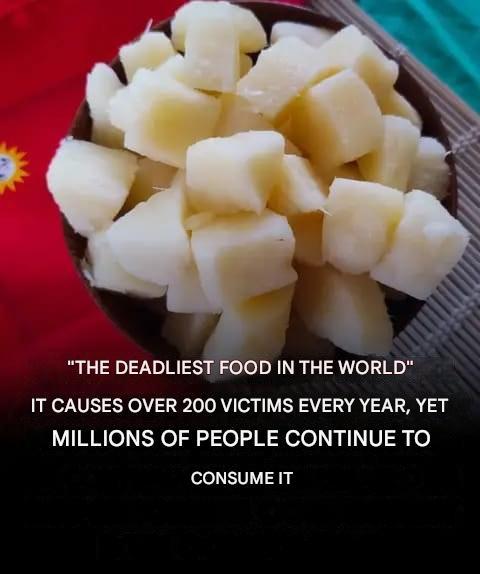
It's often said that “we are what we eat.” But did you know that some common foods can be... deadly? Behind their ordinary appearance lie formidable toxins, natural poisons, or often overlooked risks. Every year, hundreds of people pay the ultimate price. Here's a (not exactly inviting) world tour of the 10 most dangerous foods you might find on your plate.
Cassava: The World's Deadliest Food
Consumed by over 800 million people, particularly in Africa, Latin America, and Asia, cassava is a staple food... but also a potential danger. Its roots contain substances that, if improperly prepared, convert to cyanide. The World Health Organization (WHO) estimates that 200 people die each year from cassava poisoning. Yet, if properly prepared (soaking, cooking, or fermenting), it is completely harmless.
This pufferfish attracts thrill-seekers. Why? Because it contains a toxin 200 times more potent than cyanide. A small mistake in its preparation can lead to rapid paralysis... and death. Only qualified and certified Japanese chefs are allowed to serve it. Around fifty cases of poisoning are reported each year.
Carom: beautiful, but not for everyone
This star-shaped fruit is rich in vitamin C, but it also contains neurotoxins. In cases of kidney disease, these neurotoxins accumulate rapidly in the body, causing neurological problems and, in severe cases, even death. It should be avoided if you have kidney problems.
The fruit is delicious, but be careful with the pit. Cherry, apricot, and apple pits contain a compound that releases cyanide when chewed or crushed. Don't panic if you accidentally ingest a pit, but if consumed in large quantities, they become toxic.
Green potatoes: a classic to keep an eye on
When exposed to light, potatoes turn green and produce solanine, a toxic compound. In large quantities, it can cause vomiting, confusion, or even paralysis. Tip: Peel potatoes carefully and discard any that have turned green.
Cashews marketed as “raw” are actually pre-steamed. This is because genuine raw cashews contain urushiol, an irritant also found in poison ivy. They should be consumed only after processing.
Nutmeg: a magical spice… or a bad idea?
Nutmeg is perfect for gratinating, but it becomes toxic in large doses. Two teaspoons can be enough to cause hallucinations, nausea, and confusion for several days. Use with caution!
Wild mushrooms: watch out for lookalikes
Every fall, amateur mushroom hunters mistake poisonous mushrooms for edible ones. The result: dozens of serious poisonings each year. If in doubt, refrain from picking them.
Rhubarb: sweet in cakes, toxic in the leaves
We love the stems in pies, but the leaves are to be avoided. They're high in oxalic acid and can cause kidney problems if consumed in large quantities. Peel them well and save only the stems.
Raw red beans: a classic that needs to be cooked well
Although safe when cooked, raw kidney beans contain a toxin called phytohemagglutinin. If undercooked, they can cause serious digestive problems. Always boil them for at least 10 minutes before eating.
Eating yes… but with full awareness!


0 Comments:
Enregistrer un commentaire