
You’re in the backyard, maybe trimming hedges or checking the fence line, when something unusual catches your eye.
There it is.
A hard, brown, foam-like mass stuck to the fence post. Roughly oval. Textured. Almost like dried expanding insulation foam someone sprayed and forgot about.
Your first instinct? Scrape it off.
But something makes you hesitate.
And that pause might be the smartest thing you did all day.
Because that strange, hardened blob isn’t construction residue.
It’s almost certainly a praying mantis egg case, also known as an ootheca.
What You’re Probably Looking At
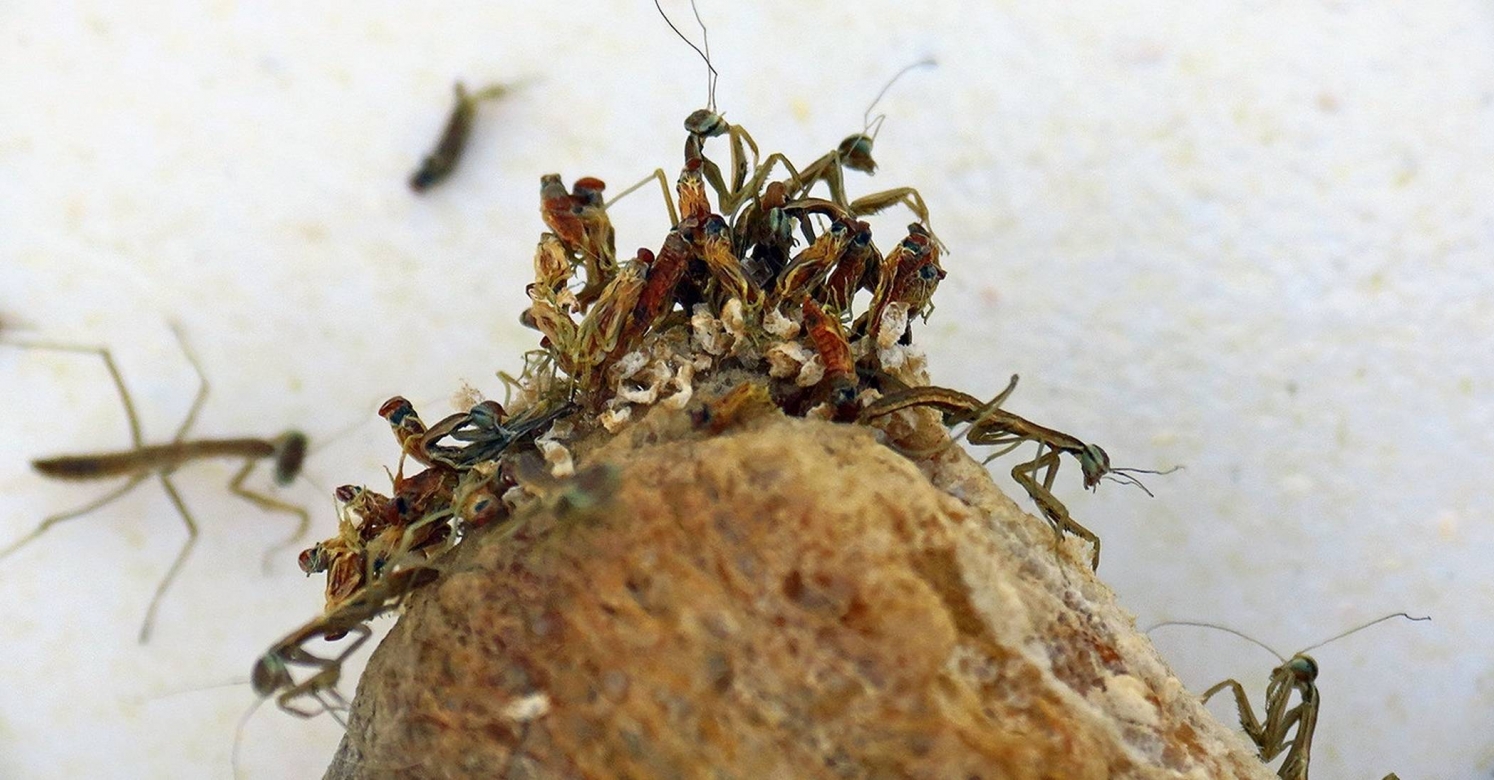


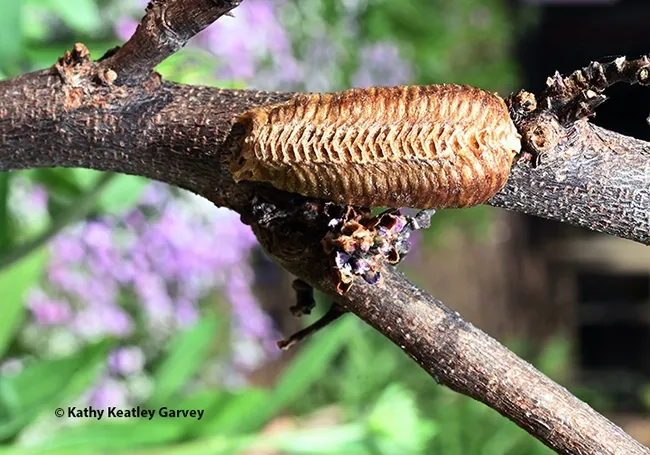
That hard, foam-like structure is created by a female praying mantis in late summer or early fall.
After mating, she produces a frothy secretion that surrounds her eggs. This foam quickly hardens upon exposure to air, forming a protective casing. Over time, it dries into the rigid, ridged structure you found.
Inside?
Anywhere from 50 to 200 tiny mantis eggs.
Yes — what looks like backyard debris is actually a nursery.
Why It Looks Like Spray Foam
The comparison to insulation foam is common — and accurate.
When freshly laid, the mantis egg case looks soft and bubbly. But within hours, it hardens into a lightweight yet durable protective shell.
Its texture often resembles:
Expanding construction foam
A dried sponge
Peanut brittle without the gloss
A hardened dollop of caramel
The color ranges from tan to dark brown, depending on species and age.
And they’re often attached to:
Fence posts
Tree branches
Shrubs
House siding
Garden stakes
Outdoor furniture
In other words, exactly where you found it.
What’s Happening Inside Right Now?
If you discovered it in fall or winter, the eggs inside are likely dormant.
If it’s spring?
Things are about to get interesting.
When temperatures warm consistently, the egg case softens along a seam. Tiny mantis nymphs begin emerging — sometimes all at once — in a wriggling, almost surreal cascade of miniature mantises.
Each one is perfectly formed. Just tiny.
No larval stage. No caterpillar transformation.
They hatch as fully shaped, mini predators.
Should You Remove It?
This is where your hesitation matters.
Scraping it off destroys the eggs inside.
If you value natural pest control and biodiversity, leaving it in place is usually the best choice.
Praying mantises are beneficial insects. They feed on:
Flies
Moths
Beetles
Crickets
Grasshoppers
Even small garden pests
They are generalist predators, meaning they eat what’s available. While they don’t discriminate between “good” and “bad” insects, their presence generally supports ecological balance.
If the egg case is in a high-traffic area and must be moved, it can sometimes be carefully relocated — but it’s delicate work and not guaranteed to succeed.
How to Confirm It’s a Mantis Egg Case
Here are identifying features:
Shape:
Oval or elongated blob, usually 1–2 inches long.
Texture:
Foamy, ridged, slightly bumpy surface.
Color:
Tan, beige, brown, or grayish.
Attachment:
Firmly glued to a solid surface.
Season:
Typically found from fall through early spring.
If it matches those characteristics, you’ve likely identified it correctly.
Could It Be Something Else?
While mantis egg cases are common, a few other things get mistaken for them.
1. Mud Dauber Wasp Nests


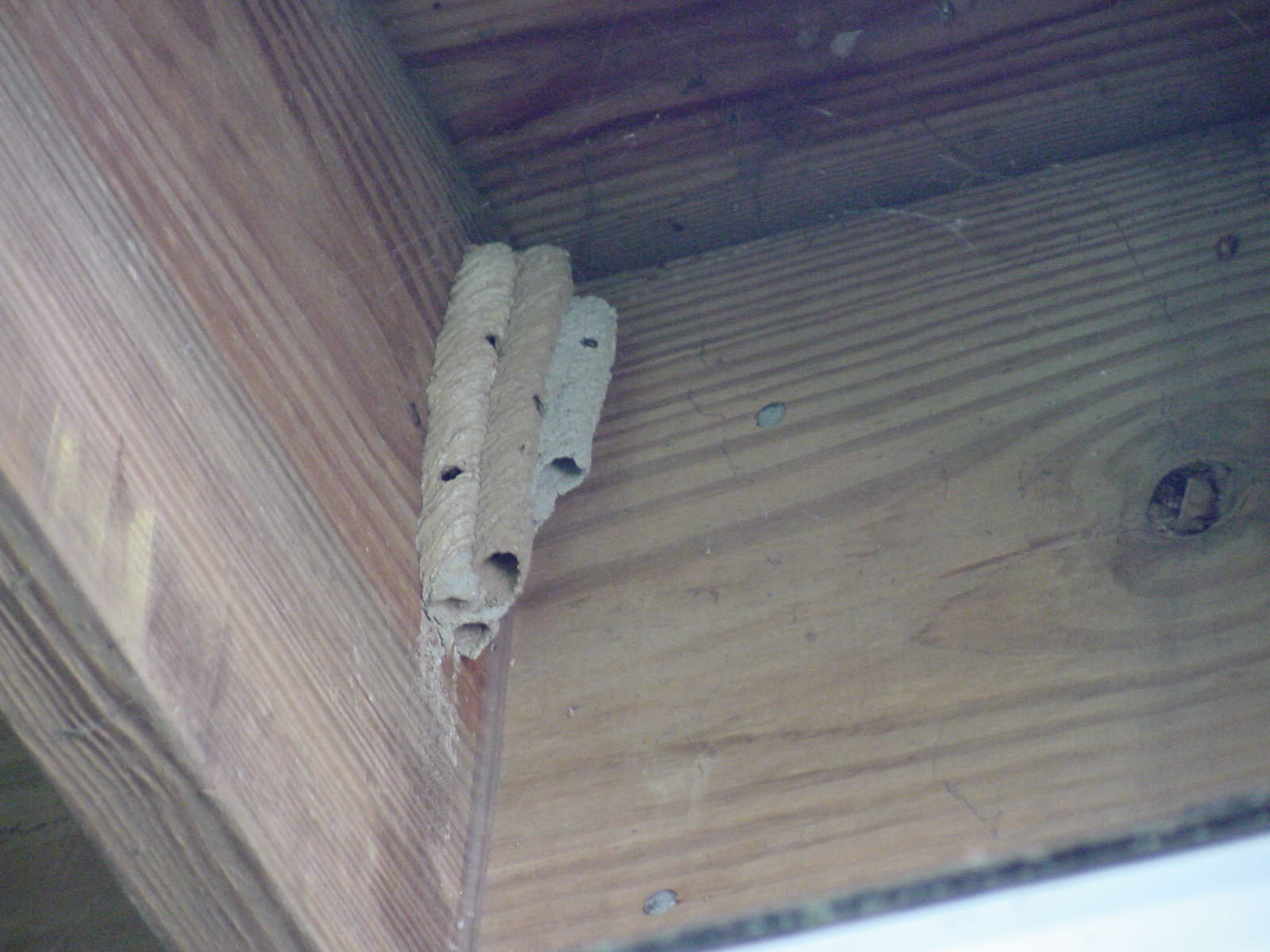

These are made of mud, not foam. They look like tubes or organ pipes rather than a single bubbly mass.
2. Expanding Insulation Foam
Construction foam has a shinier, synthetic look and may appear irregularly sprayed rather than deliberately formed.
3. Fungal Growth
Some bracket fungi grow on wood, but they usually resemble shelves or mushrooms rather than hardened foam blobs.
If yours looks sculpted, sealed, and compact — it’s almost certainly mantis-related.
The Fascinating Life Cycle
Let’s zoom out for a moment.
A female mantis mates in late summer. Afterward, she searches for a secure location. Fence posts are perfect — elevated, stable, and safe from ground moisture.
She deposits eggs within the foam structure, which hardens into a protective incubator.
Winter arrives. Snow falls. Winds blow.
The egg case survives.
When spring warmth arrives, the outer casing softens. A thin seam opens. Nymphs spill out and disperse quickly, often hanging briefly on silk-like threads before dropping to nearby vegetation.
Within weeks, they begin hunting.
Within months, they’re full-sized predators.
Nature wastes no time.
A Backyard Ecosystem in Action
What feels like a random discovery is actually a glimpse into a functioning ecosystem.
Your fence post isn’t just a boundary marker.
It’s habitat.
Insects, spiders, birds, fungi, bacteria — they all interact in ways we rarely notice until something unusual catches our eye.
The mantis egg case is proof that your yard supports life cycles you never consciously invited.
And that’s a good sign.
Is It Dangerous?
Short answer: no.
Mantis egg cases are harmless to humans and pets.
They don’t sting.
They don’t spread disease.
They don’t damage wood.
The adult mantises themselves are also harmless to people. At most, a startled mantis might pinch defensively — but they’re not aggressive.
They’re far more interested in hunting insects than interacting with you.
What If You Accidentally Brought It Indoors?
This happens more often than you’d think.
Someone brings in firewood during winter. The egg case warms up indoors. Weeks later — surprise — dozens of tiny mantises emerge in the living room.
If this happens:
Gently collect the nymphs (if possible).
Release them outside in shrubs or garden areas.
Avoid crushing or vacuuming unless absolutely necessary.
It can be startling — but it’s temporary.
Why We Hesitate
There’s something instinctive about pausing before scraping off something unfamiliar.
Curiosity overrides impulse.
That hesitation reflects something valuable — an awareness that not everything strange is disposable.
Many beneficial creatures get destroyed simply because they look unfamiliar.
The mantis egg case challenges our snap judgments. It looks artificial. Out of place. Almost invasive.
But it’s natural engineering at work.
What To Do Next
If you’ve confirmed it’s a mantis egg case, you have a few options:
Leave It Alone
The simplest and best choice.
Mark the Spot
If you’re curious, note the location and check back in spring to witness hatching.
Relocate Carefully
If absolutely necessary, gently remove the section of wood or branch it’s attached to and re-secure it nearby in a sheltered outdoor location.
Avoid scraping directly. The eggs are inside the hardened foam.
A Tiny Reminder From Nature
Backyards often feel controlled — mowed lawns, trimmed hedges, straight fence lines.
But nature operates quietly within that structure.
The mantis egg case is a reminder that life unfolds whether we notice it or not.
Predators and prey. Birth and dormancy. Survival through winter.
All attached to a fence post.
The Bigger Picture
Moments like this shift perspective.
That odd brown blob isn’t debris.
It’s resilience.
It’s future motion waiting for warmth.
It’s 100 tiny predators preparing to patrol your garden without you ever asking them to.
And your hesitation — that small pause before scraping — preserved an entire generation.
Final Answer: What Is It?
That hard, foam-like brown structure attached to your fence post is almost certainly a praying mantis egg case.
It’s not trash.
It’s not damage.
It’s not fungus.
It’s life in suspended animation.
And come spring, if you’re lucky enough to witness it, your backyard will briefly look like something out of a nature documentary — as dozens of miniature mantises emerge and scatter into the green.
All because you paused.
Sometimes the most important discoveries start with hesitation.


0 Comments:
Enregistrer un commentaire